The laurel forest, the chapel, the old village, the clam beds and the trails: everything you can discover on this Atlantic Islands National Park island in the Ría de Arousa.
The largest laurel forest in Europe, in the northern half of the island.
The chapel of the Virgen de los Milagros, its stone cross and the remains of the pilgrims' hospital.
The old village, starting point of the two signposted trails.
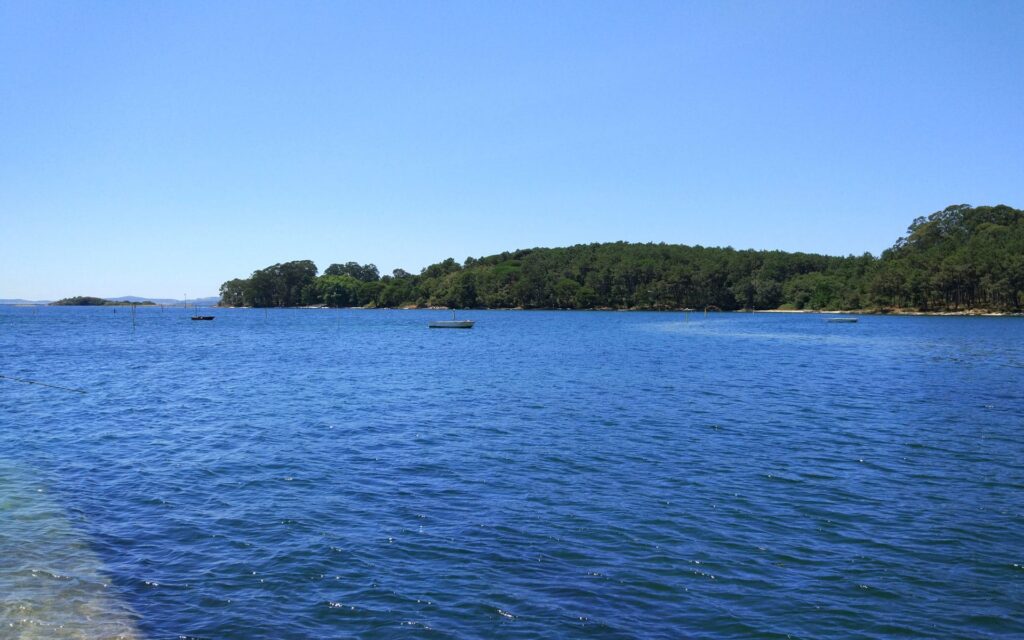
Views of the Malveiras islets and the Ría de Arousa from the circular trail.
It's Cortegada's great treasure. In the northern half of the island grows a laurel forest (Laurus nobilis) of around two and a half hectares, considered the largest in Europe, with trees over ten metres tall. Beneath the canopy it is shady and damp, with the ground covered in moss and leaves.
Up to five different woodlands can be found on the island: as well as the laurel forest there are oaks, pines and eucalyptus, and in the north-west there is a very well-preserved oak wood. It is home to the spectacular stag beetle, Europe's largest beetle.
Read more about the forest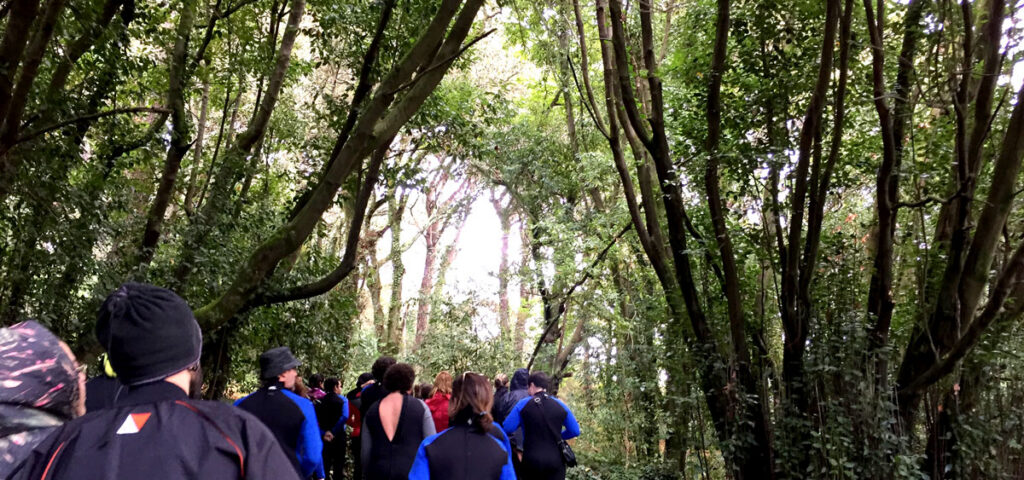
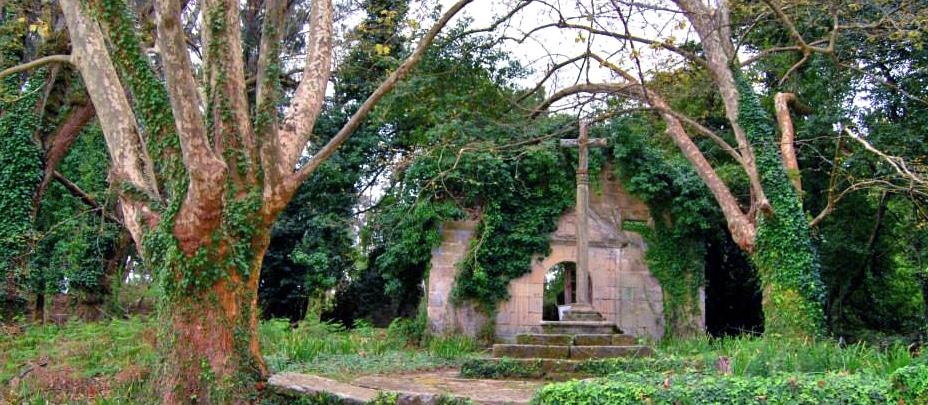
In the Middle Ages the chapel of the Virgen de los Milagros was built on the island, a place of pilgrimage where crowds of the faithful came seeking healing. In the 18th century it was rebuilt outside the village to stop the pilgrims from infecting the local people.
An old stone cross stands in front of the chapel, and next to it are the remains of the 18th-century pilgrims' hospital, or lazaretto. It's one of the stops on both island trails.
The story of the chapel and the little hospitalCortegada was inhabited for centuries. Only a few houses survive from the old village, restored for National Park services; the rest now lie under the vegetation, a striking sight of nature reclaiming its space.
Both signposted trails start and finish by the village. Its recent history is linked to King Alfonso XIII, who was to be given the island to build a summer residence, a project that never went ahead.
Cortegada and King Alfonso XIII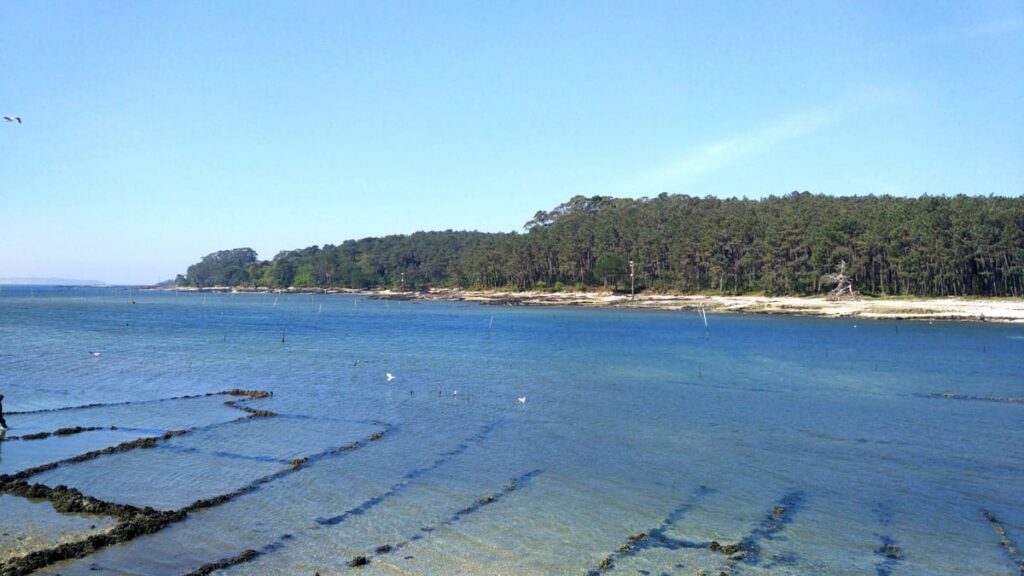
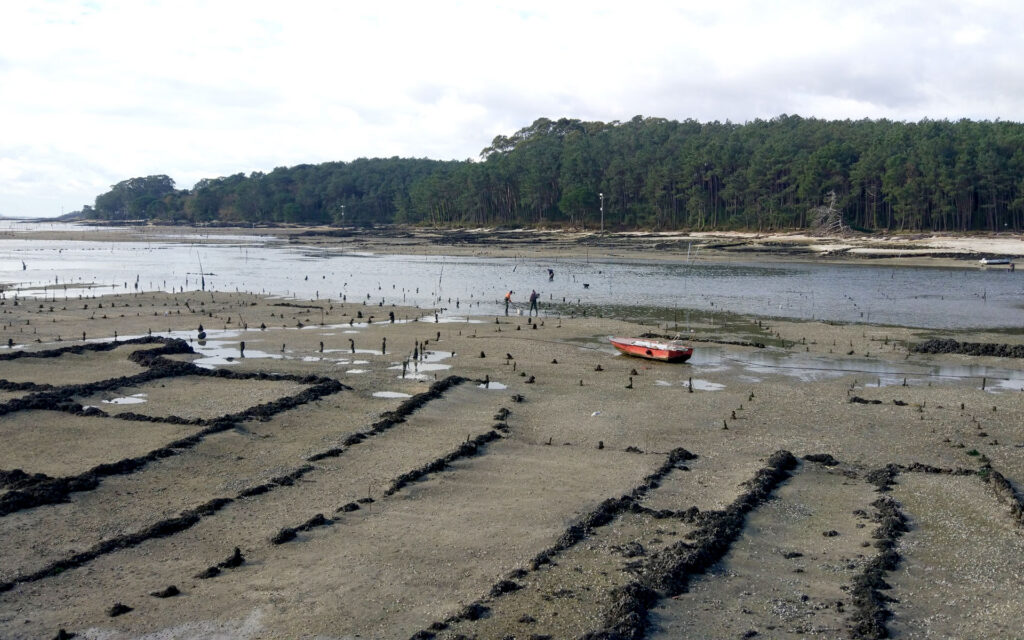
The famous Carril clam beds link the island to the port and are the mainstay of the local economy. The sandbank exposed at low tide offers ideal conditions for commercially farming this prized shellfish.
It's a type of farming unique to the area, the smallholding system: clams are raised in marked-out plots under individual concessions. That's why you should always respect the shellfishing areas.
Cortegada is a tidal island: it's joined to the mainland by a sandbar 189 metres wide that is covered at high tide and exposed at low tide. The Camino del Carro runs across it, linking the island to Carril over about 200 metres.
Tides change very quickly here and it can be dangerous to walk along the path, which also crosses the clam beds. The recommended way to get there is by boat or kayak with authorised guides.
How to get to the island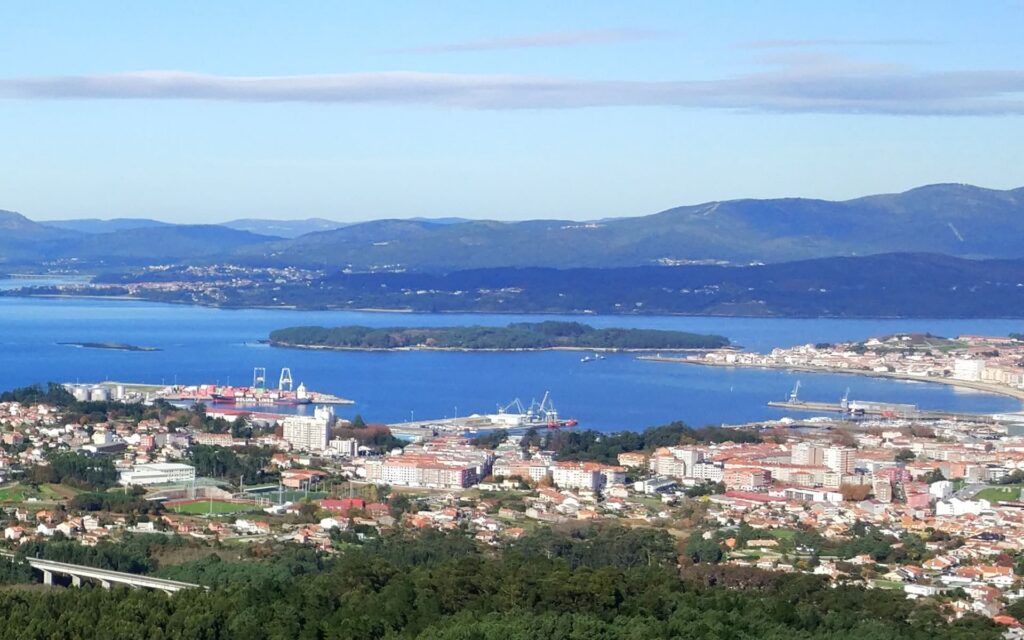
Cortegada lies on the Traslatio Route, also called the Maritime and River Way of St James, which recalls the journey by sea of the remains of the Apostle St James along the Ría de Arousa and the River Ulla.
Evidence of this is the Punta Corveiro stone cross, which has marked the way for pilgrims since the 1960s, and the older cross standing in front of the chapel of the Virgen de los Milagros.
Discover the Traslatio RouteCortegada forms a small archipelago with the islets of Malveira Grande, Malveira Chica, O Con and Briñas. They are all National Park reserves and can't be visited, but you get a great view of them from the west shore on the circular trail.
Malveira Grande is known for its unusual Pyrenean oak wood. Being near the mouth of the River Ulla, the island is sheltered from the wind inside the estuary, which helps its damp forests thrive.
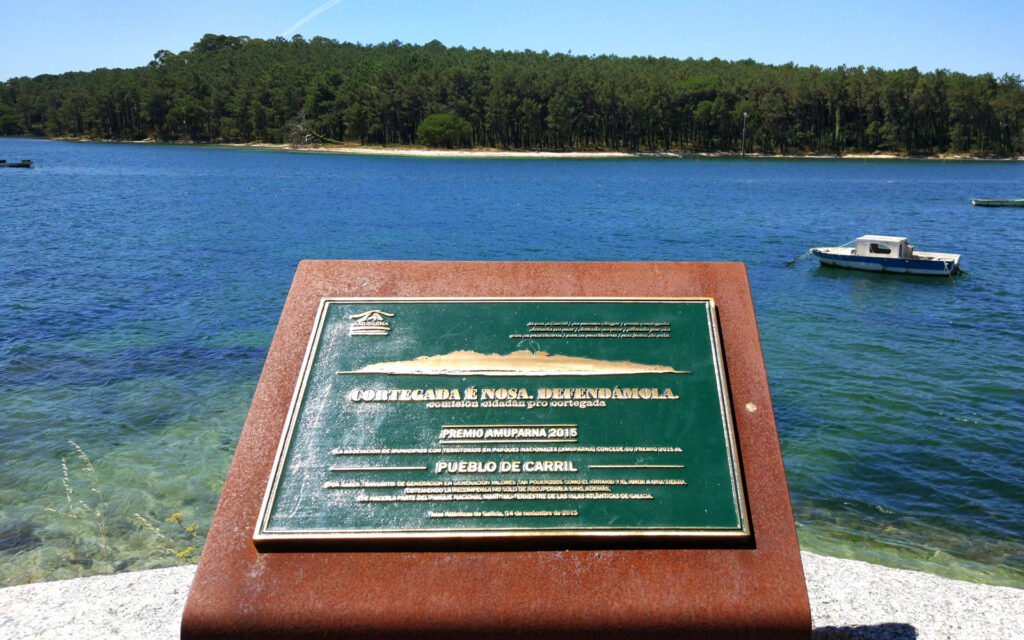
The oceanic climate, the almost constant humidity and the fresh water from its seasonal pond and underground make Cortegada a unique haven for biodiversity in the Rías Baixas.
Surveys by the University of Santiago de Compostela have recorded nearly a thousand species of fungi on the island, some described here for the first time.
The forest is home to valuable species such as the stag beetle, a protected insect that needs dead wood and native trees like oak.
Cortegada's low shores are a good place to watch herons and waders. Birds living on the island include the European turtle dove, which probably breeds nowhere else in the National Park, and the black redstart.
Both start and finish by the old village and are flat and easy. Visits to the island are always with authorised guides.
It goes all the way around the island. The first part follows the west shore, with views of the archipelago's islets, and passes the chapel and the laurel forest.
It crosses the interior of the island so you can admire the magnificent laurels and other trees such as oaks, pines and eucalyptus.