

Kayak route to Cortegada Island
A fun and original way to visit Cortegada: set off from Bamio beach, paddle between the Carril clam beds and reach the island under your own steam.
See the kayak routeDiscover nature at its finest: Europe's largest laurel forest, just 200 metres from Carril, in the Ría de Arousa.
Laurel forest
The largest in Europe
Tidal island
By boat, by kayak or on foot at low tide
2 signposted trails
From 45 min to 1 h 15 min
Cortegada Island is nature at its finest: originally a rock rising from the sea, covered by the largest laurel forest in Europe and with a sandy seabed ideal for growing clams. The island, between Vilagarcía de Arousa and the River Ulla, was already visited by the Roman geographer Pliny the Younger. It can be reached by boat, but also on foot at low tide along the Camino del Carro, a distance of about 200 metres between Carril (Vilagarcía de Arousa) and Cortegada.
Cortegada Island is part of the Atlantic Islands National Park and lies on the Way of St James route known as the Traslatio Route, also called the Maritime and River Way of St James.
Discover the island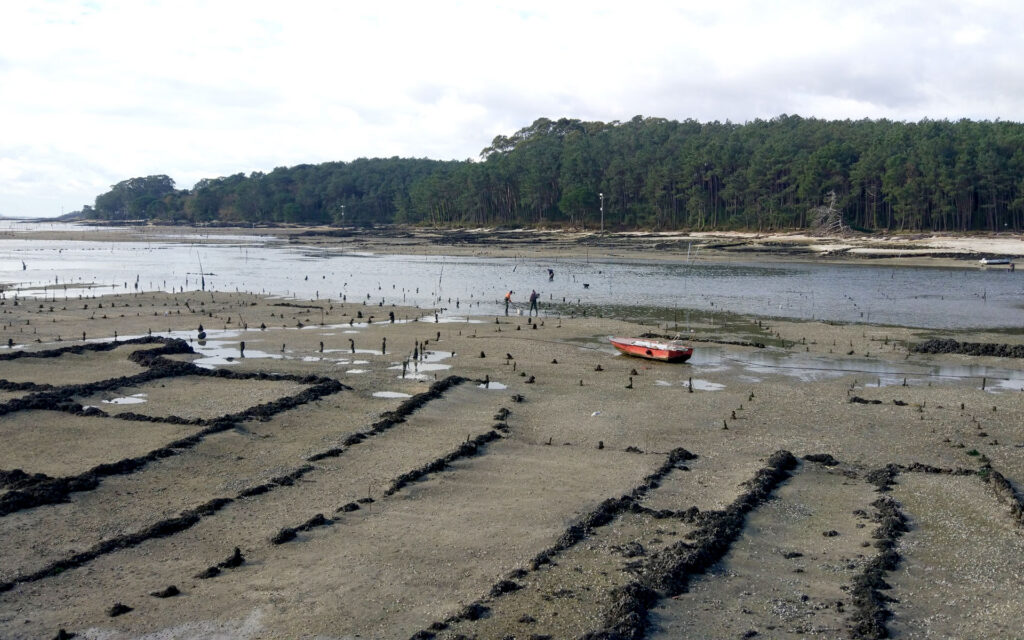
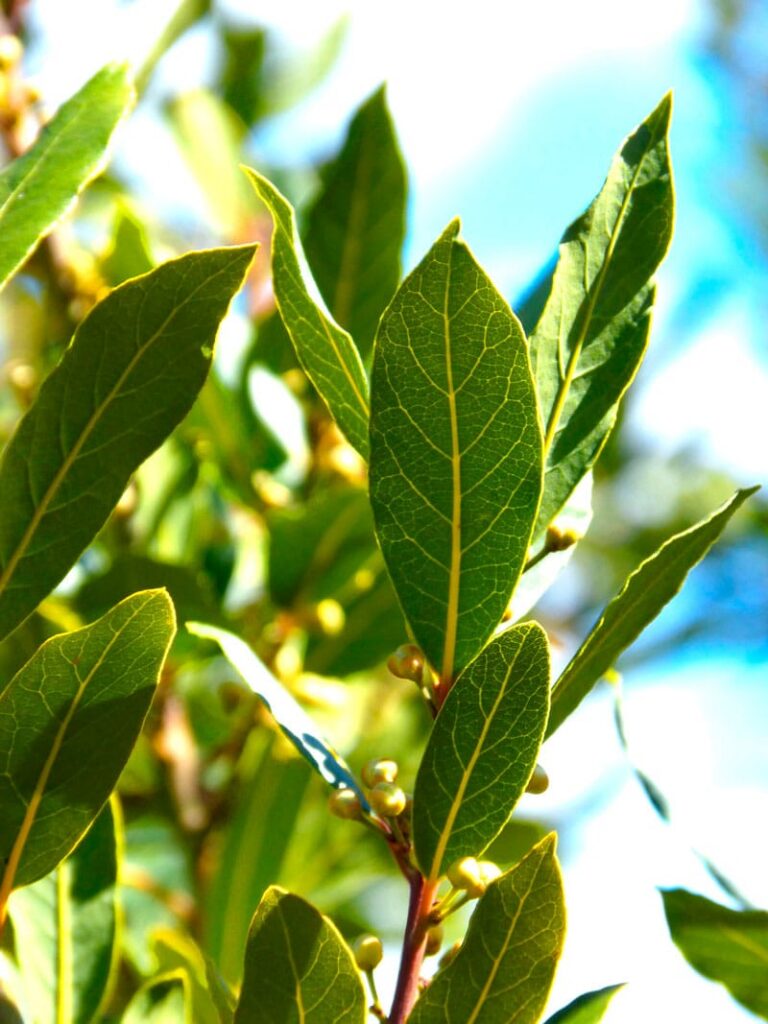
The northern part of Cortegada is home to the largest laurel forest in Europe (Laurus nobilis), growing alongside oaks, willows, hazels, pines and eucalyptus. The island's special climate has preserved this fragile woodland and, although the undergrowth is fairly sparse because little sunlight gets through the dense canopy, there is a very rich variety of mushrooms (45 species).
As well as its wonderful variety of mushrooms, the island also has plenty of seaweed, which local coastal farmers collect to fertilise their fields.
A visit to Cortegada Island takes just under two hours. There are two circular trails, both starting and ending at the old village: the first goes all the way around the island, with beautiful views of the Ría de Arousa; the second runs through the forest.
History, myths and traditions of the laurelTwo ways to reach Cortegada and walk its trails with qualified guides from the Atlantic Islands of Galicia National Park.
A fun and original way to visit Cortegada: set off from Bamio beach, paddle between the Carril clam beds and reach the island under your own steam.
See the kayak routeAn original and comfortable way to visit Cortegada: a boat transfer to the island's jetty to enjoy the walking trail, and back again by boat.
See the boat tripNature, history and seafaring tradition on an island of just 54 hectares, sheltered from the wind in the Ría de Arousa estuary, near the mouth of the River Ulla.
The largest laurel forest in Europe, with up to 5 different woodlands and home to the spectacular stag beetle.
A chapel of medieval origin, rebuilt outside the village, next to the remains of the pilgrims' hospital and a stone cross.
The starting point of both trails. Some houses have been restored for Park services; the rest lie hidden under the vegetation.
A sandbar linking the island to Carril that appears at low tide. Tides change fast: take care.
The famous Carril clam beds link the island to the port and are the backbone of the local economy.
Cortegada lies on the Maritime and River Way of St James, as shown by the Punta Corveiro stone cross that marks the way for pilgrims.
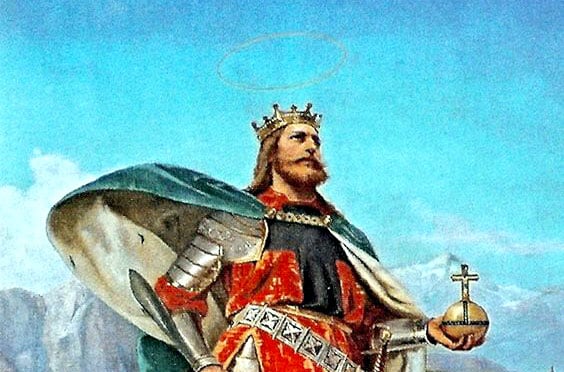
In 1014 the Viking Olaf Haraldsson, later King Olaf II of Norway and Saint Olaf, camped on Cortegada Island during his raids up the Ría de
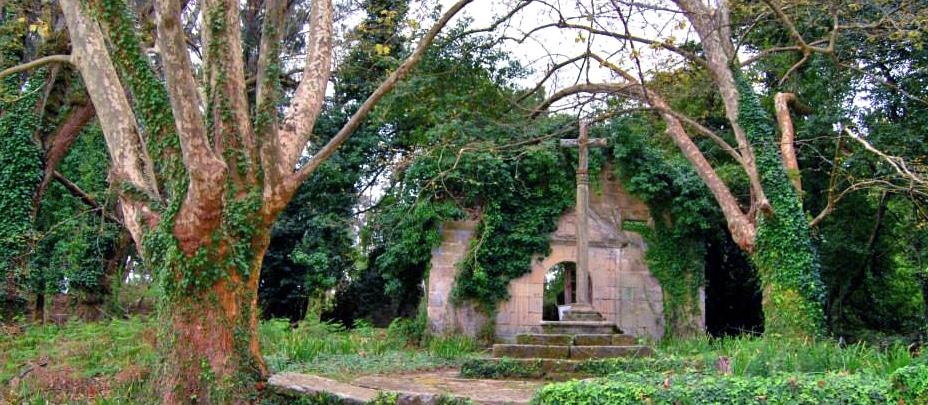
The chapel of the Virgen de los Milagros, from 1334, and the pilgrims' hospital built in 1652: the heritage of the old village on Cortegada Island.
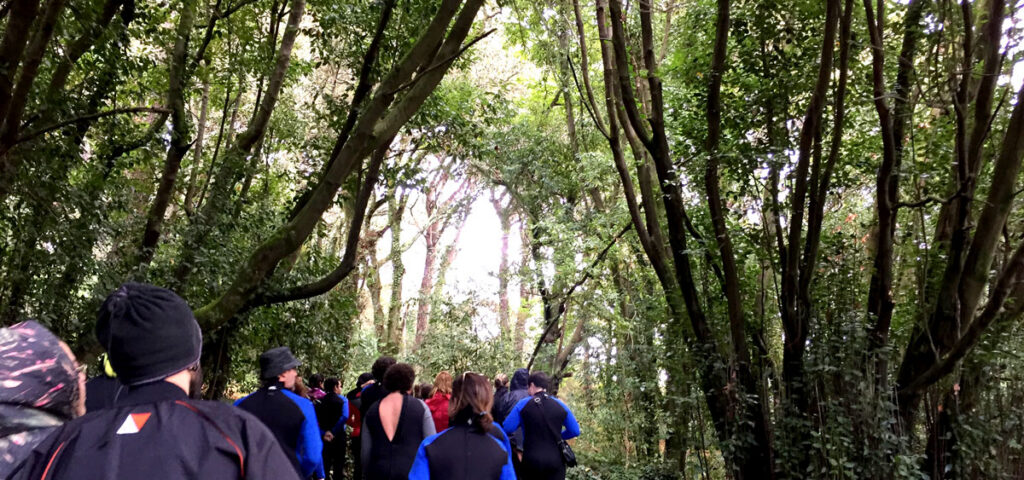
Cortegada's laurel forest, the largest in Europe, and the myths and traditions of the laurel: from Apollo and Daphne to the victors' wreaths.
Visits are limited to 125 people a day and depend on the tides. They are run by authorised companies with qualified guides: ask for information and we'll put you in touch with them.