
Long before Alfonso XIII and the Bourbons, another legendary future king, from the distant lands of the north, set up camp on Cortegada Island. Olaf Haraldsson, later Olaf II of Norway and afterwards canonised as Saint Olaf, had a Viking past that crossed paths with Cortegada Island.
Who was Olaf II Haraldsson?
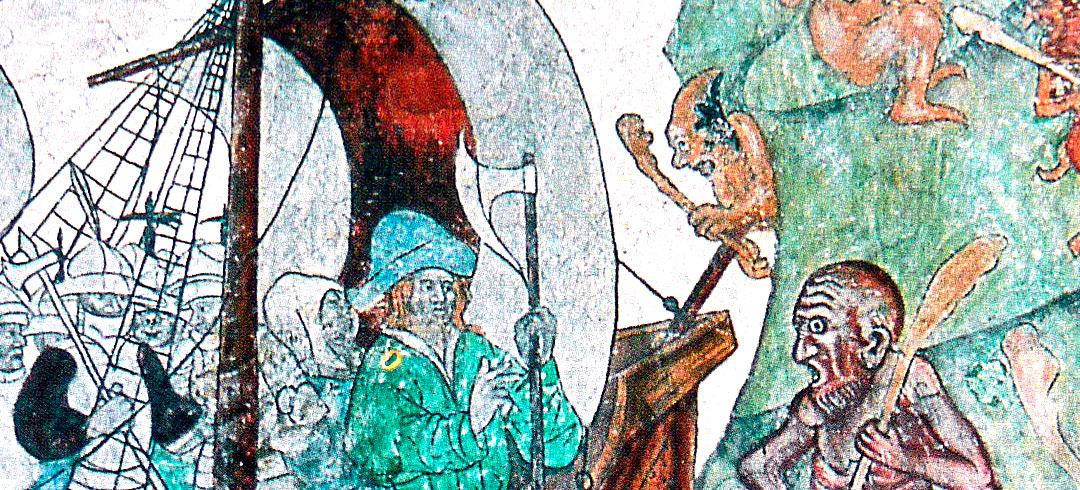
Olaf II sailing among trolls. Painting on stone in the church of Dingtuna, Sweden.
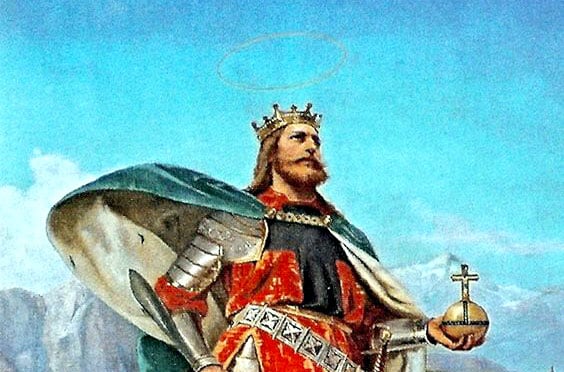
The son of the lord Harald Grenske and a descendant of King Harald I Fairhair of Norway, Olaf was born around 995. He grew up a pagan and became a Viking warrior in the Baltic. He fought against the English in 1009–1011, but later helped the English ruler Æthelred II the Unready against the Danes. When the Danish king Sweyn I prevailed in England, Olaf sailed for Spain and then France, where he was baptised in Rouen.
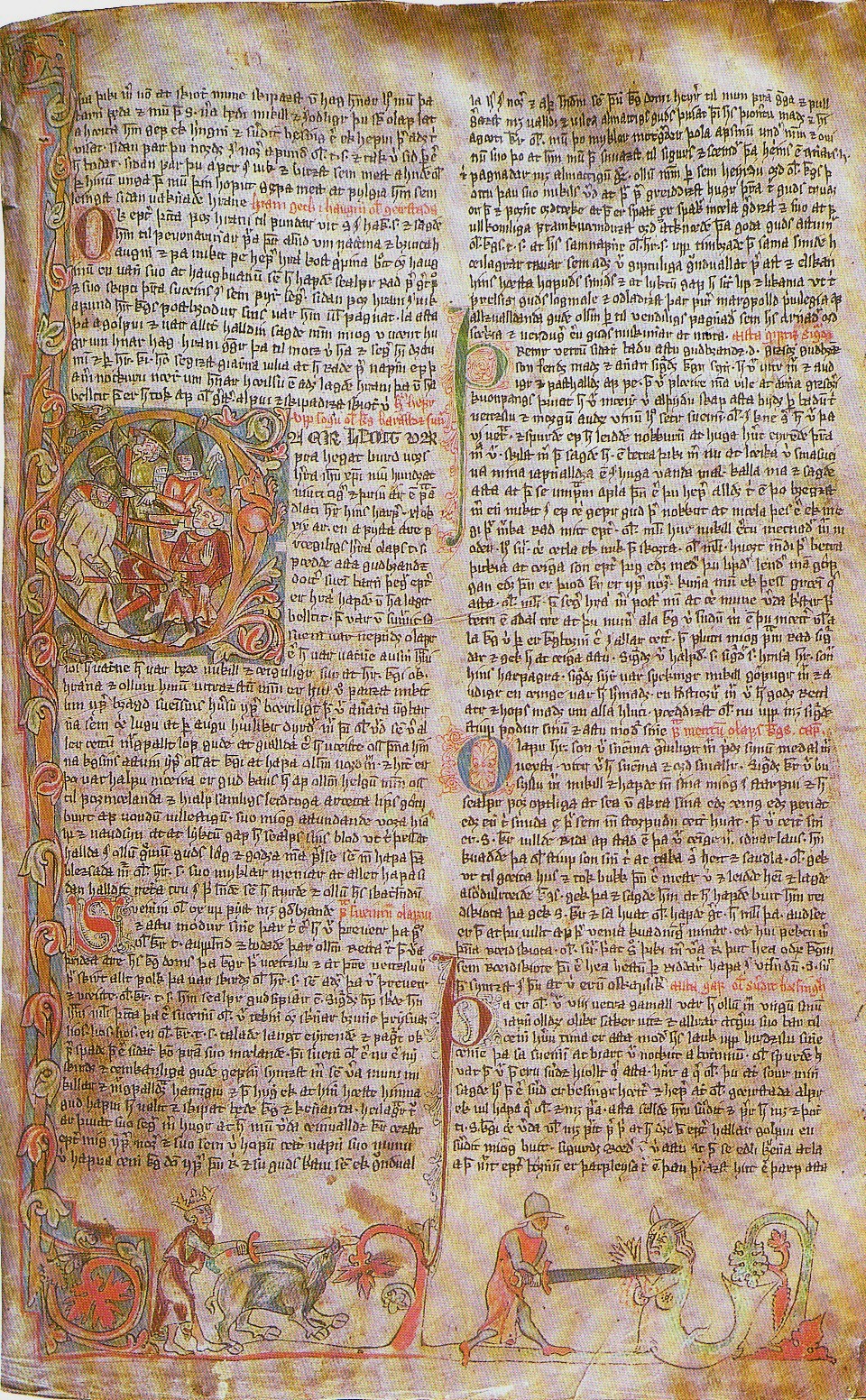
Death of Olaf II at the Battle of Stiklestad, from the Flateyjarbók (13th century).
Back in Norway in 1015, Olaf conquered territories previously ruled by Denmark, Sweden and Norway; by 1016 he had consolidated his rule over the whole of Norway. Over the next 12 years he built up his support among the inland aristocracy, pressing tirelessly for the acceptance of Christianity with the help of missionaries he had brought from England. The Church of Norway dates its birth to 1024, when Olaf and his church adviser, Bishop Grimkell, presented a religious code at Moster.
In 1019 Olaf settled his conflict with the Swedish king Olof Skötkonung and joined forces with the king’s son, Anund Jacob, when Cnut, King of England and Denmark, threatened to conquer Norway. With the promise of control over the trade routes west of Norway, and a lighter rule than Olaf‘s, Cnut won the support of Norway’s leading chieftains. Olaf was forced to flee to Russia (1028).
In 1030 Olaf tried to win back Norway, but was defeated at the Battle of Stiklestad (1030). Olaf‘s popularity, his work for the church and the legend surrounding his death, said to have been accompanied by miracles, led to his canonisation in 1031. His cult spread quickly, with churches and shrines built in his honour in England, Sweden and Rome. He was the last Western saint accepted by the Eastern Orthodox Church.
Olaf’s Galician adventure
In 1014, Olaf Haraldsson, the man who would become saint, patron and king of Norway, was still a fierce Viking, leading one of the last Norse raids through the Galician rías, the gateway to the treasures said to be held in the famous city of Santiago de Compostela.
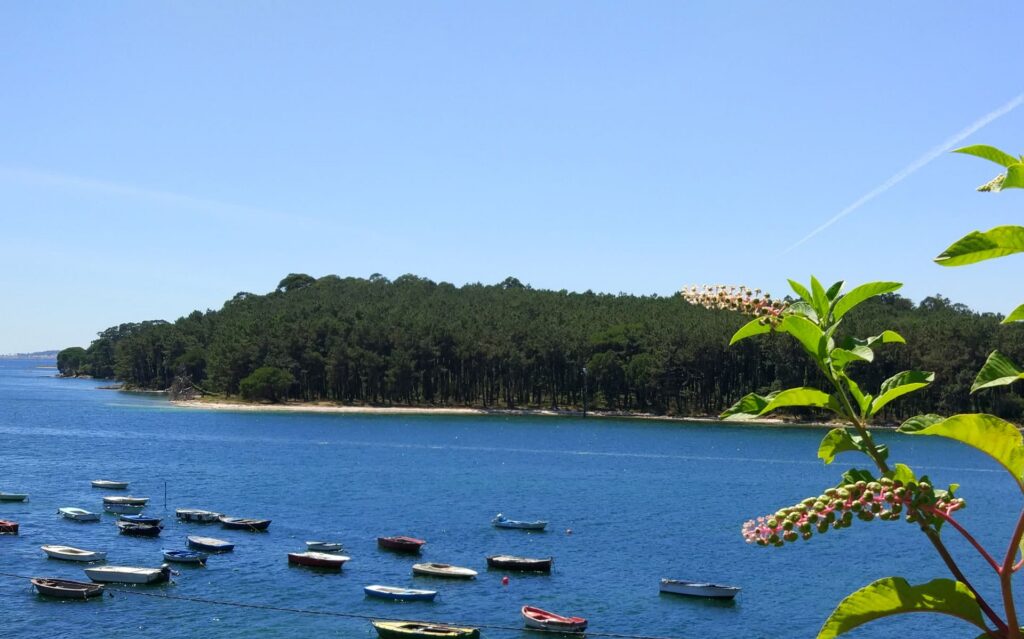
Olaf sailed his ships up the Ría de Arousa to the landing point closest to the coveted city of Compostela: the port of Carril. And Cortegada Island, right opposite Carril, was the ideal place to camp. There, deep inside the ría, his drakkars (Viking longships) were sheltered, and Olaf and his men could set up a base camp for their bloody raids on the land they called Jakobsland (the Land of St James).
No one knows for sure whether Olaf ever reached Santiago, but we do know that for some time he and his men terrorised the region with their plundering, until they were finally driven out by King Alfonso V, who defeated him and forced him to break camp on Cortegada Island and return home.