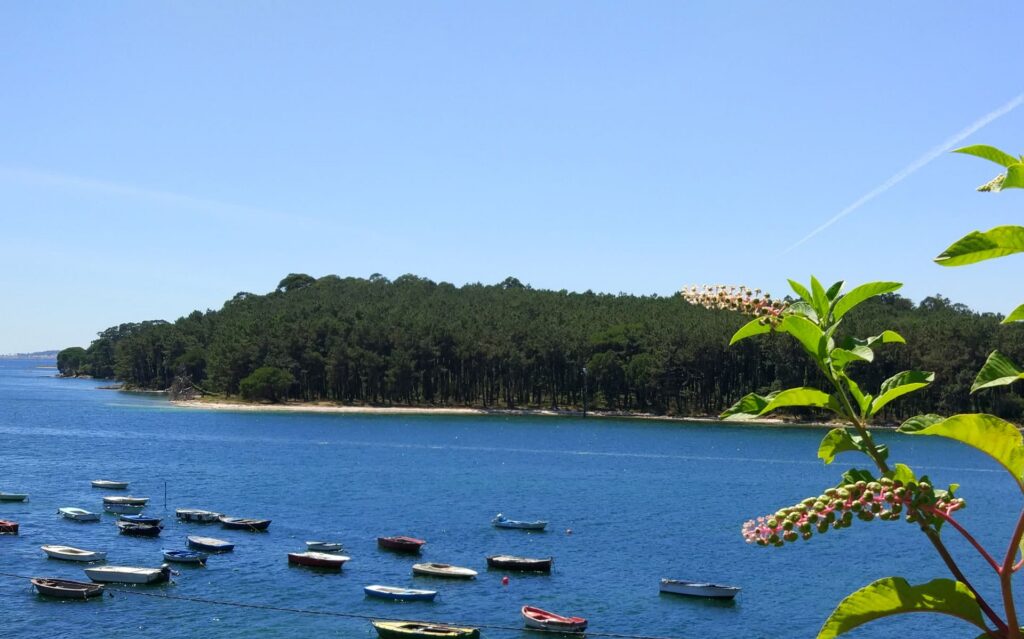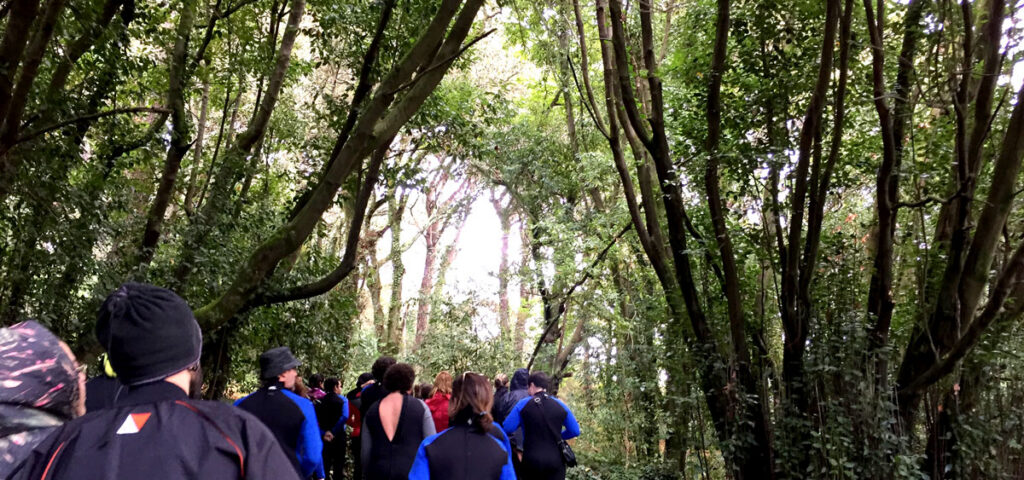

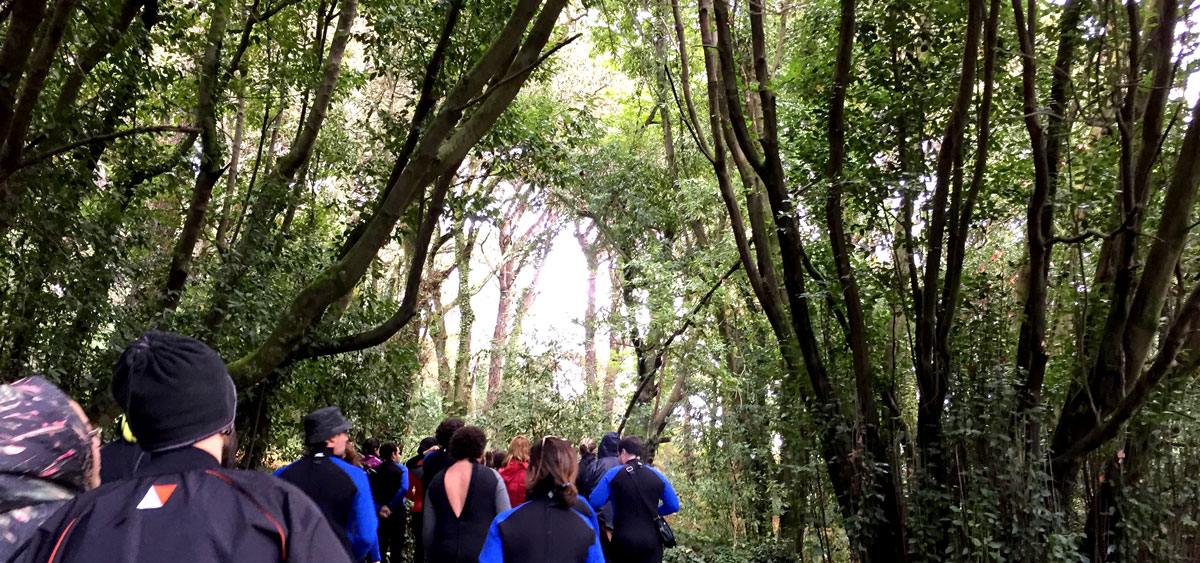
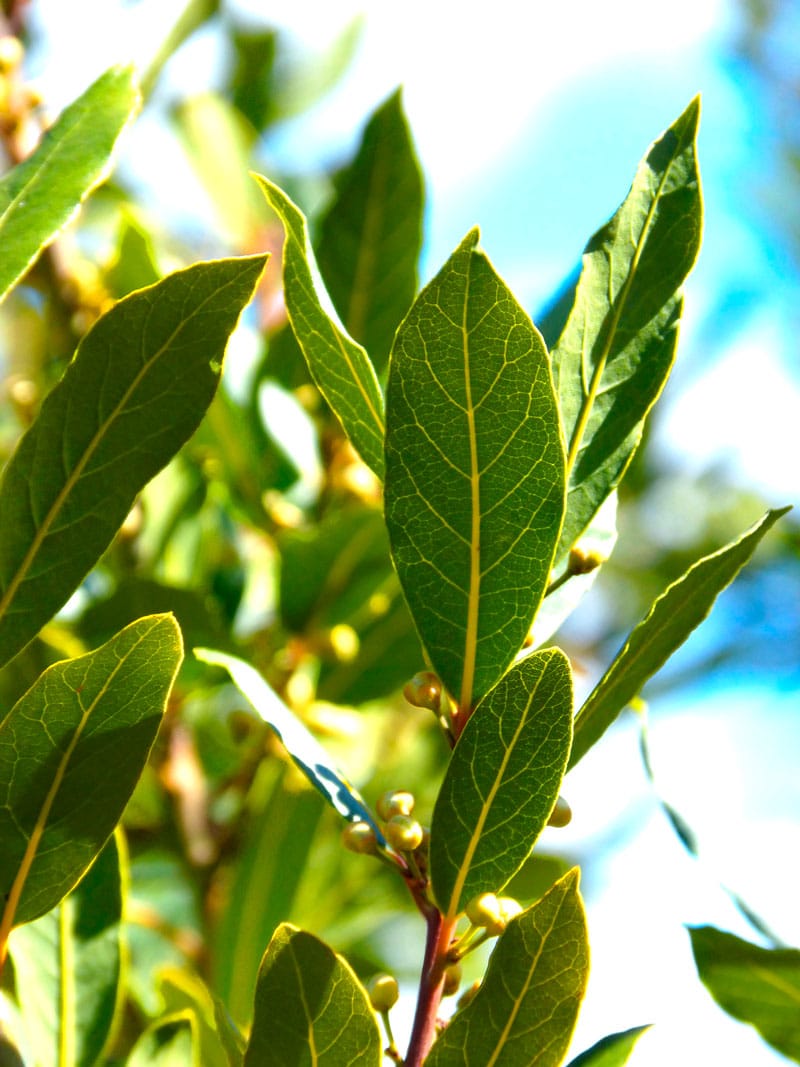
A defining feature of Cortegada Island is its dense forest of old laurel trees, the largest in Spain and probably in all of Europe.
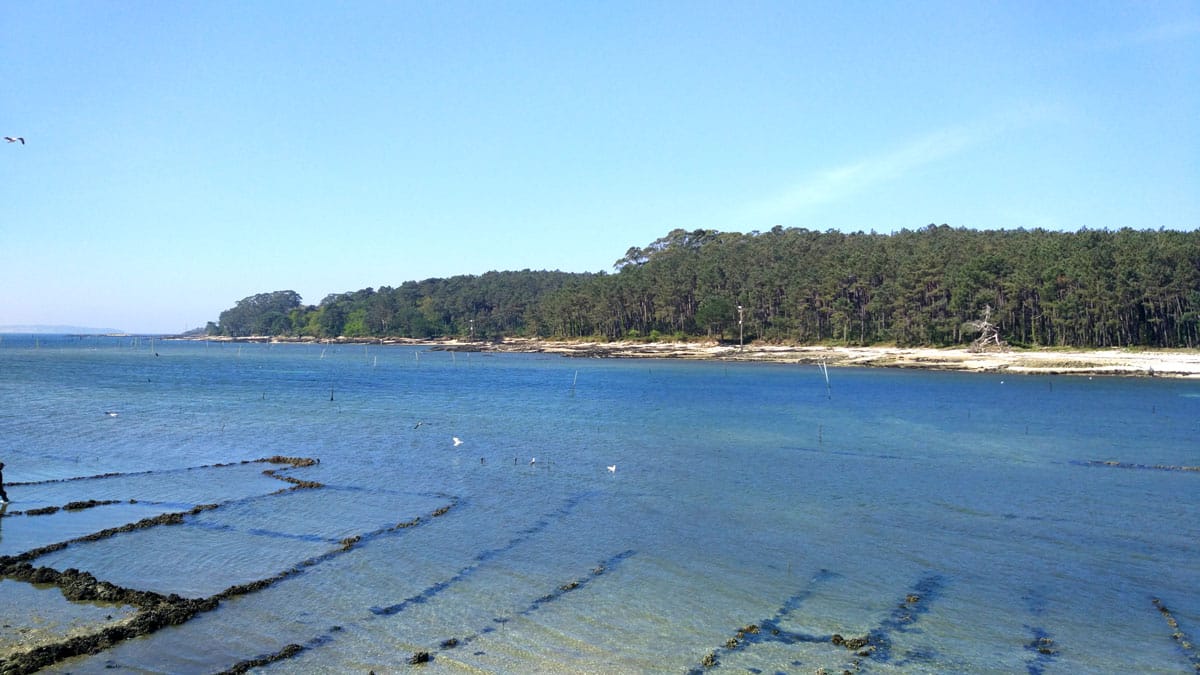
The island’s special climate and the absence of towns have allowed this noble tree to thrive exceptionally, covering two and a half hectares in the north of the island (half its total area).
But what makes the laurel such a special plant, linked to hundreds of age-old myths and legends?
The laurel: history, myths and traditions
An honour for emperors and poets, laurel leaves also flavour Galicia’s seafood cooking.
In ancient Greece, the laurel (from the Celtic “Lauer“, evergreen tree) was a plant sacred to Apollo. According to the myth, Apollo was struck by a golden arrow fired by Eros and fell passionately in love with Daphne. But the nymph, frightened by her suitor’s ardour, called on the gods for help, and they turned her into a laurel tree. From then on the laurel became an evergreen plant sacred to the divine Apollo.
Apollo himself later declared the plant sacred, making it a symbol of patience, glory and triumph. Crowning his own head with a wreath of laurel leaves, the god also decreed that any mortal who distinguished themselves through heroic deeds could do the same. That is why, at the first Olympic Games in 776 BC, the winners were crowned with laurels.
At Delphi the leaves were chewed by the Pythia (the priestesses of the oracle), and the folk practice known as daphnomancy was long a form of prophecy.
In Roman times, laurel wreaths crowned the heads of the greatest, such as poets, writers, consuls and emperors, and today the word “laureate“, used for graduates and prize-winners, comes from this aromatic plant.
Folk traditions
According to old folk traditions, Roman farmers would tie three laurel sprigs with a red ribbon to win the favour of the Sun, hoping for a good harvest that would help the wheat ripen and bring wellbeing to the people.
Even today there are various rituals linked to the laurel. It is said, for example, that putting a few laurel leaves under your pillow brings prophetic dreams, while keeping some leaves at home brings the protection of the sun god, and with it prosperity and wellbeing.
Many popular beliefs also hold that laurel is never struck by lightning, and so it protects nearby houses.
In the language of flowers and plants, the laurel stands for energy, victory and glory, and as an evergreen it is a symbol of immortality.
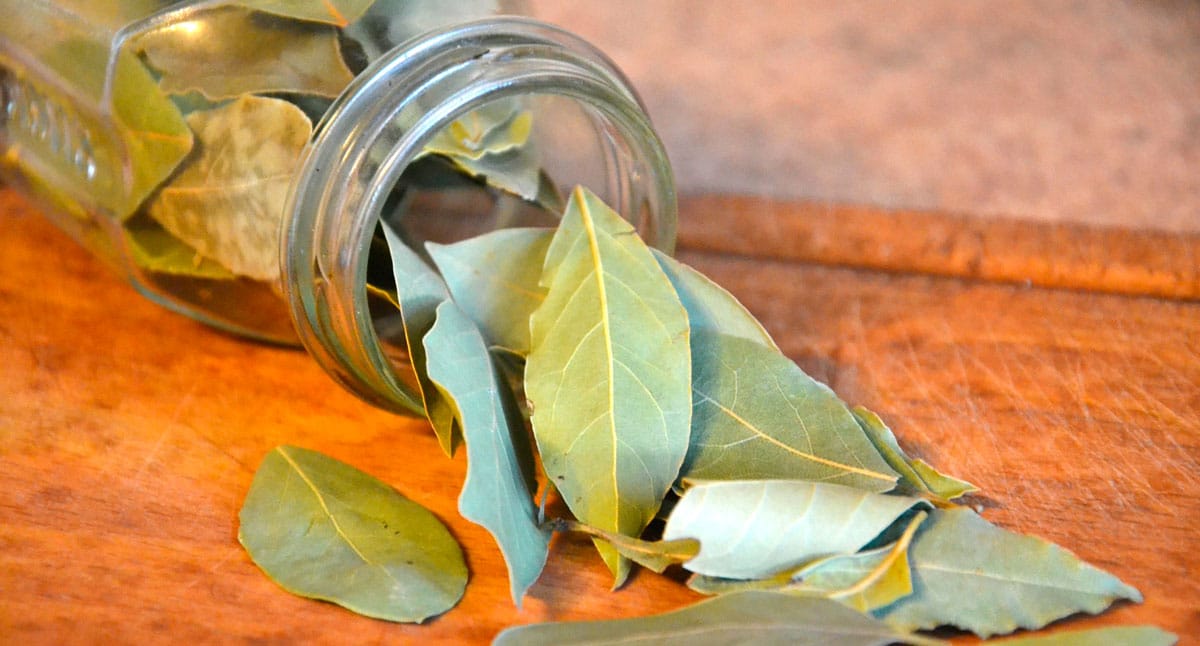
Today laurel is mainly used in cooking, but in the past it was considered a remedy for migraines, gout, asthma and fever; dried leaves were placed in wardrobes to keep insects away, while fresh leaves were tucked between the pages of books to stop them yellowing.
These are some of the stories and legends linked to laurus nobilis. When you visit the magnificent forest on Cortegada Island, you’ll be admiring much more than a “simple” tree…