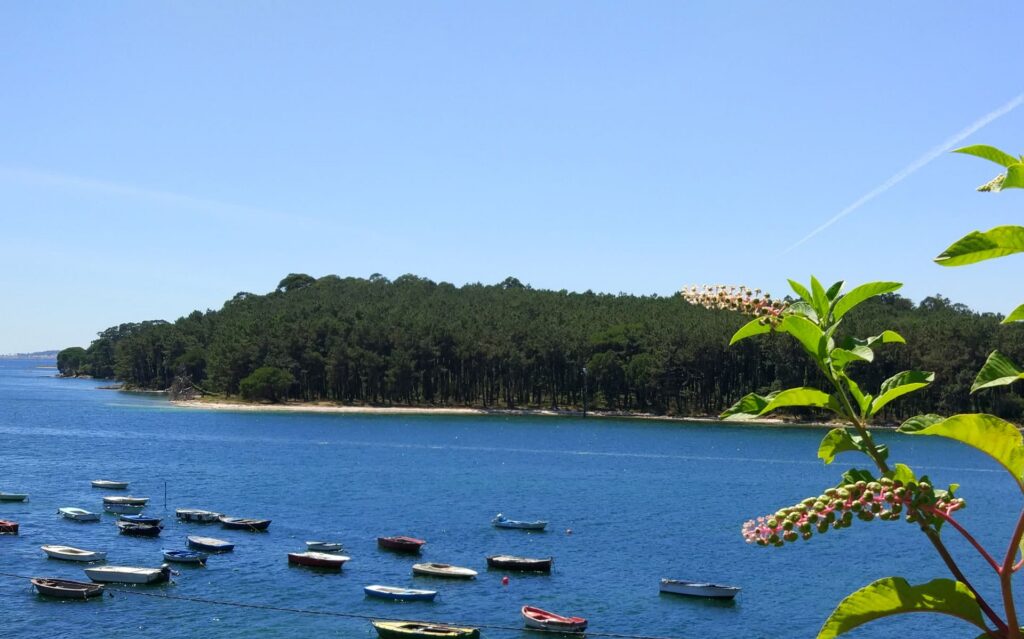

On a visit to Cortegada Island, after walking along its trails through centuries-old laurel woods, you reach what was once the old village. Among the ruins, the chapel of the Virgen de los Milagros and the little hospital stand out.
Cortegada’s shrine, dedicated to the Virgen de los Milagros (Our Lady of Miracles), dates from 1334, and two pilgrimages were held there in her honour, in March and September. Later, a hospital-lazaretto was built next to the chapel to house the pilgrims who came to make their requests to the Virgin.
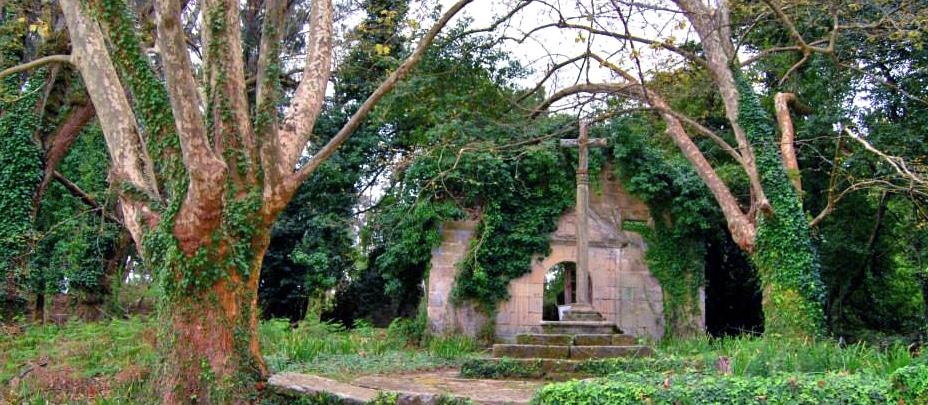
Both buildings originally stood in the middle of the village. In 1652 they were moved to their current site, to stop the large numbers of sick pilgrims seeking healing from infecting the people of Cortegada. Their remains can still be seen there, caught up in the ghostly yet beautiful vegetation.
Above the arch of the chapel door you can see, carved in stone, the coat of arms of Don Fernando de Andrade y Sotomayor, the Archbishop of Santiago de Compostela, who ordered the chapel to be moved. In front of the chapel stands a cruceiro (stone cross), probably erected in the late 18th or early 19th century.
The “hospitalillo” (little hospital), although known as the “Hospital de Carril“, stood on the island. It was built to care not only for the people of the parish but also for those attending the March and September pilgrimages, and for any pilgrim on the Way of St James who needed help. The oldest remains of the hospital date from 1652, and records show the building was repaired in the 18th century.
Walking along the shady, silent trails of Cortegada Island, among the ruins of the old houses, the chapel and the hospital, visitors can feel a sense of peace and calm that surrounds the history of these ancient buildings.